
AI Hiring Pipeline — Automating the Candidate Journey End-to-End
Overview
From application to interview, scored against a role-specific bar instead of a generic filter.
The problem
Hiring was a major bottleneck. The company received a large volume of applications, but the hiring bar wasn't generic, it looked for people who were highly driven, comfortable with modern AI tools, and able to operate with high ownership, and what that meant varied by role. Reviewing every application manually against a bar like that didn't scale.
What I built
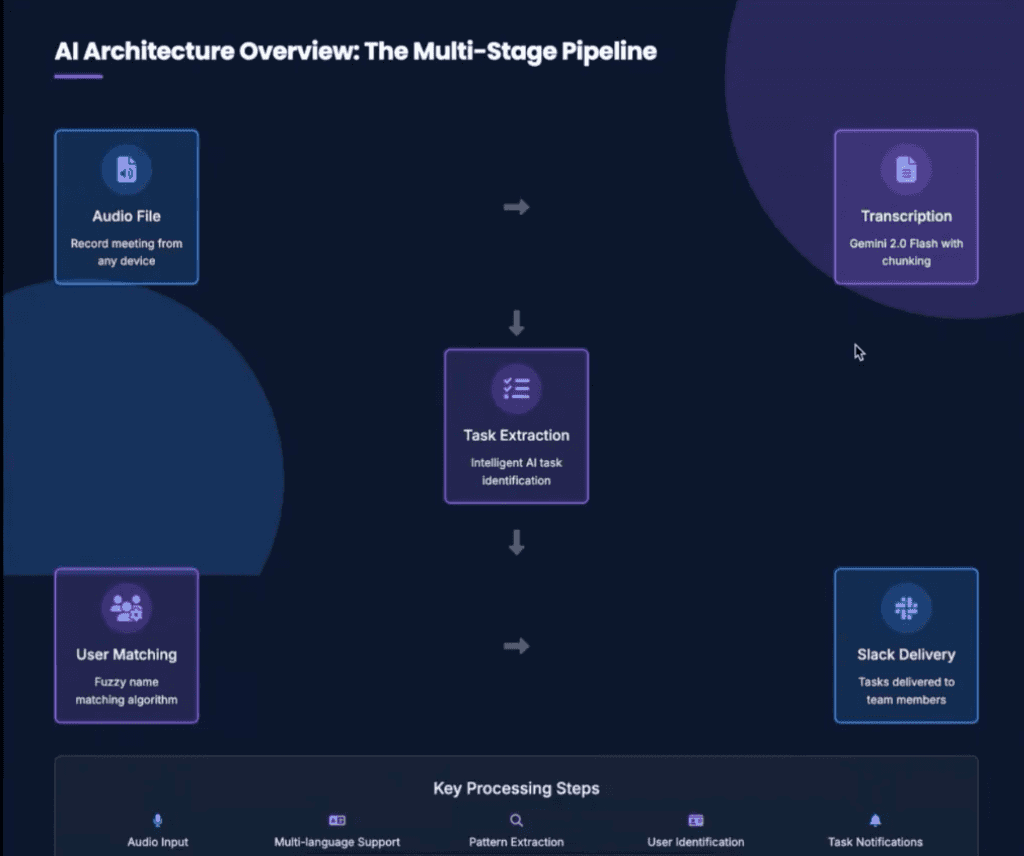
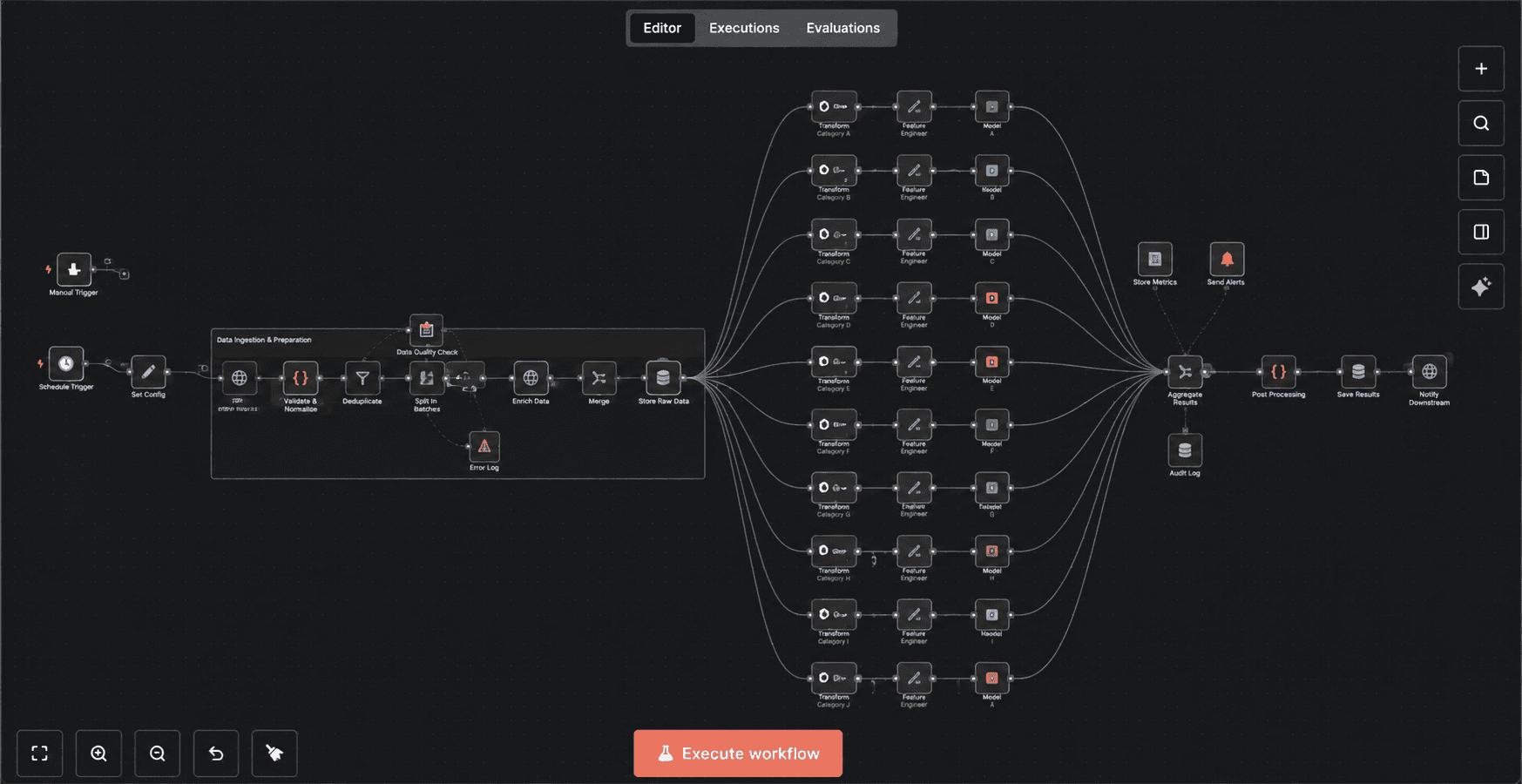
I worked with subject-matter experts across business, product, customer success, engineering, and other teams to define what a strong candidate actually looks like for each role, then built role-specific AI pipelines around those definitions. A master pipeline identifies the role an application is for and routes it into the matching pipeline. Resumes are converted from PDF to text and evaluated against experience bands (0-1, 1-3, 3-5, 5+ years), then scored using role-specific evaluation prompts built directly from the requirements gathered from each team's experts. From there, the system handles most of what used to be manual coordination: surfacing promising candidates to HR and the hiring team through Slack, sending personalized rejection emails that explain areas for improvement and invite candidates to reapply later, triggering assignments for shortlisted candidates, scheduling assignment windows and sending deadline reminders, evaluating engineering candidates' GitHub submissions against coding and structural standards, and pulling meeting notes from the meeting-recording system into the candidate's HR profile. It also manages the final culture-fit stage, where candidates record responses to role-specific questions, with the video/audio and transcripts collected into the same candidate profile.
Impact
What started as resume screening grew into an end-to-end candidate workflow, application, screening, assignment, evaluation, interviews, and culture fit, reaching about 97% agreement with human reviewers while removing a large share of the manual screening and coordination work. At current scale, the system has processed and organized 30,000+ candidate records, all segregated, searchable, and retrievable per role and per pipeline stage, work that would have been effectively impossible to track manually at this volume.