



Asset Management — Map Platform for Large-Scale Asset Operations
Overview
Import, render, and drill into thousands of physical assets on one map.
The problem
For large industrial customers, a site can contain thousands of physical assets, oil tanks, wellheads, solar panels, spread across a huge area. Before this, there was no real way to bring that many assets onto a map, work with them at scale, or pull up the history and inspection logs for any individual one without it being slow or falling over.
What I built
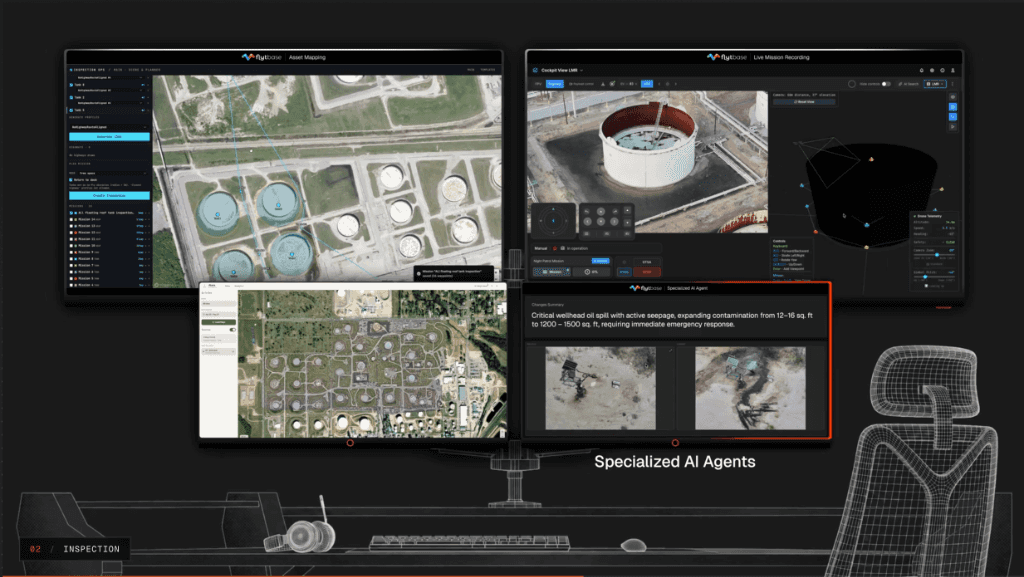
The base layer of Asset Management: a map platform that lets operators import assets in bulk (via KML/KMZ) or draw them directly on the map, render thousands of them at once, and drill into any single asset to see its logs, media, and inspection history. I built the underlying asset-management service and took it through production, a NestJS backend handling bulk KML/KMZ imports with asynchronous processing and live progress updates, and a rendering path built to handle 10,000+ assets on the map without choking. I also moved the service from a single replica to a highly available Kubernetes deployment, adding horizontal pod autoscaling, pod anti-affinity, and rolling updates, and optimized the large-scale rendering path so saves dropped from 10-20 seconds down to sub-second. This foundation is also what higher-level features build on, like defining a reusable inspection profile once and applying it across many assets.
Impact
Made it possible to work with a site's entire asset inventory as data, thousands of assets imported, rendered, and inspectable in one place, instead of handling each one manually. This is the same kind of scale problem SQM's 678 km² mining site deals with in the field, where autonomous inspections have to run across a huge number of assets continuously.